We ranked the usual advice against what women in our community keep coming back to. Heat did better than we expected. One popular recommendation didn't make the cut.
Peace Love Hormones Editorial · Reviewed by our formulation team · 6 min read
The advice hasn't changed much in forty years. Take an ibuprofen, use a heating pad, maybe go on the pill. Which is odd, because we understand pretty well what causes cramps and there are a few things that work directly on it.
Two things drive period pain. Your uterus contracts hard enough to briefly squeeze off its own blood supply, and prostaglandins decide how hard those contractions get. Everything that helps is working on one of those, or both.
Worst to best.
Published by Peace Love Hormones. We make one of the products ranked below, the one at number 1. We've tried to be fair about where the others win. Educational only, not medical advice.
Period Pain
Ranked, worst to best
05
Waiting it out
Cost: free · Works: no
Still the most common advice, usually unspoken. Pain that regularly takes out your day isn't something to tough out, and it isn't something to file under normal either.
If it makes you miss work, if it's getting worse year over year, or if it turns up outside your period, get it looked at. Endometriosis still takes years to diagnose in most women, largely because they were told this was normal.
No mechanismDelays diagnosis
Not a plan. Book the appointment.
04
Magnesium
Cost: $10 to $25 a month · Works: a little, slowly
Magnesium relaxes muscle and plenty of women are running low, so it's worth taking anyway. But it works in the background over weeks. It won't do much for you on day one.
Watch the form. Magnesium oxide is the cheap one in most bottles, barely absorbs, and mostly affects your digestion. Glycinate or citrate are worth the extra couple of dollars.
CheapReal mechanismSlowNot acute relief
Worth taking. Won't rescue you.
03
Heat, specifically continuous heat
Cost: $15 to $40 once · Works: yes, immediately
Heat is better than its reputation. Held against your lower abdomen continuously, it brings blood flow to the area and relaxes the muscle that's spasming. Studies putting continuous low-level heat wraps up against oral painkillers have found them roughly comparable for period pain.
The problem is practical. A heating pad keeps you near an outlet and a microwave pack has gone cold by the time you've found your keys. Stick-on heat patches solve that. Keep some in your bag.
Works immediatelyNo side effectsBuy it onceNot portable
The best thing on this list you don't swallow. Use it alongside whatever else you're doing.
02
Ibuprofen and naproxen
Cost: pennies · Works: yes, with caveats
Credit where it's due. Ibuprofen works, and it works on the right thing. NSAIDs block prostaglandin production, which is what sets cramp intensity in the first place. Take it before the pain peaks and most women get real relief.
Two reasons it isn't first. Regular use is rough on your stomach lining, and it does nothing about why some cycles are worse than others. If you're quietly increasing your dose every month, that's information.
FastRight mechanismHard on your stomachDoesn't touch the cause
Works. Fine now and then. Not something to lean on twelve times a year for a decade.
01
Our pick
A herbal antispasmodic tincture
Cost: $49 a month · Works: 15 to 30 minutes
This is the one that hits both mechanisms at once without the stomach cost.
Cramp bark does the heavy lifting. Its compounds relax smooth muscle and have a particular affinity for the uterus. Ginger handles the inflammatory half. Research has put it up against ibuprofen for period pain and found it holds its own, and it settles the nausea that often rides along with a bad cramp day. Dong Quai and Chinese peony add blood-moving, tension-easing action in uterine tissue. Lemon balm takes down the tension that makes pain feel bigger than it is.
Format does more work here than people expect. A capsule has to dissolve in your stomach before anything reaches your blood, which takes 45 to 90 minutes. A tincture goes in under the tongue and starts working in 15 to 30. When you're doubled over, that gap is the whole point.
Both mechanisms15 to 30 minWorks preventivelyEasy on your stomach
The most complete option here, and the only one you can start two days early to make the whole period easier.
#1 PICK · FAST PERIOD SUPPORT
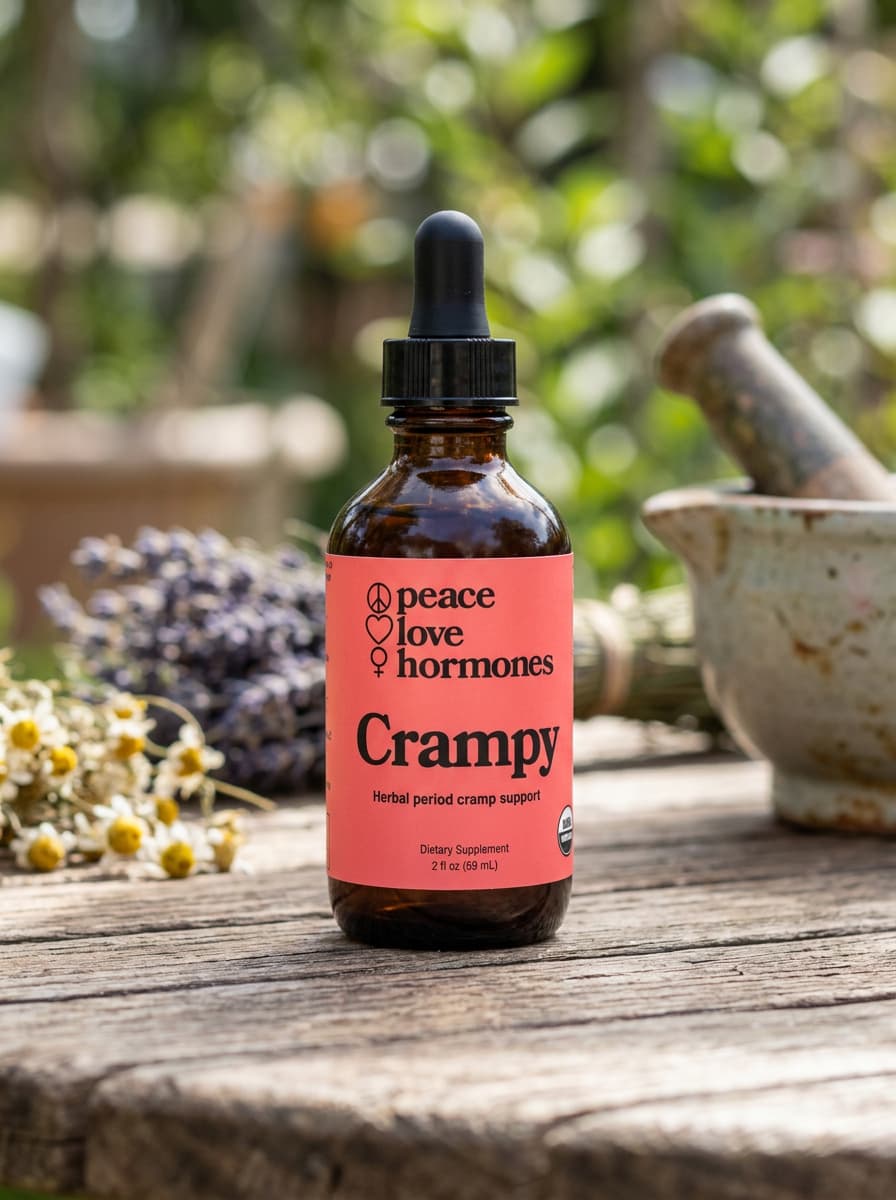
Crampy
Period cramp relief · 2oz tincture
Cramp bark, dong quai, ginger and lemon balm
Relief in as little as 30 minutes
Absorbs 3 to 5 times faster than capsules
Start a day or two before your period for an easier cycle
OnsetRelaxes muscleLowers prostaglandinsFine to use regularly
Crampy15 to 30 minYesYesYes
Ibuprofen20 to 30 minNoYesNot long term
Heat wrapImmediateYesNoYes
MagnesiumWeeksPartlyNoYes
Herbal capsules45 to 90 minVariesVariesYes
If your cramps are bad every single cycle, treat them in two places. The day itself, and the twenty-odd days before it.
Crampy handles the day. How bad that day gets is decided upstream, by inflammation and by how well your body is clearing estrogen. The women who see the biggest change usually run something daily alongside it.
Subscribers save on every order — not just the first one. Skip, swap or cancel whenever you like.
C
Crampy
Period pain support — fast acting, deeply herbal.
Antispasmodic blend for period pain, taken on the days you need it.
$88.20$147.00You save $58.80 · 40% off
Billed today · $29.40 per bottle · ships every 3 months
That 40% applies to every order for as long as you stay subscribed — $58.80 less than paying one-time.
Ships in 1–2 business days, free on every subscription order.
Add another tincture — optional
+ Your year of perks
Instant · Free ebook
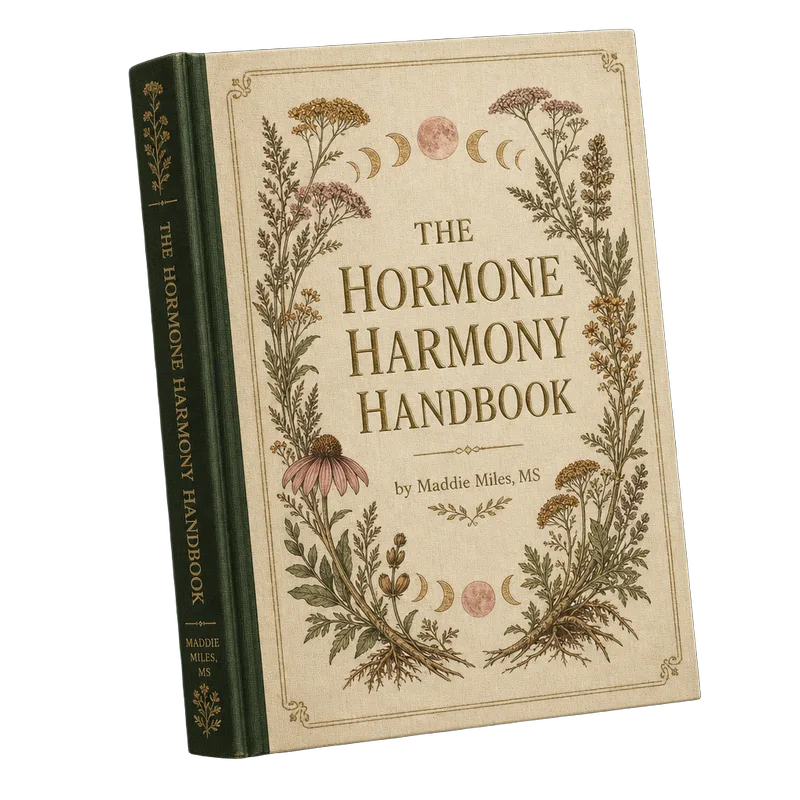
The Hormone Harmony Handbook
20 chapters on cycles, herbs & the full PLH lifestyle — delivered to your inbox right away.
Month 1 · Welcome box
Signature shot glass + gift box
A curated welcome box ships with your first order — including our signature dosing glass.
Every order
Free shipping
Ships in 1–2 days
Month 6
$50 store credit
Auto-applied to your account
Always
Inner circle
Recipes, rituals & protocols
Always
Skip · swap · cancel
Change anything, anytime
Free shipping on every subscription order
Skip, swap or cancel anytime
The First-Bottle Promise — 30-day money-back
Refunds cover one bottle per customer
These statements have not been evaluated by the Food and Drug Administration. This product is not intended to diagnose, treat, cure, or prevent any disease. This article is for educational purposes and is not a substitute for medical advice. If your symptoms are severe, sudden, or new, please speak with a qualified healthcare provider.